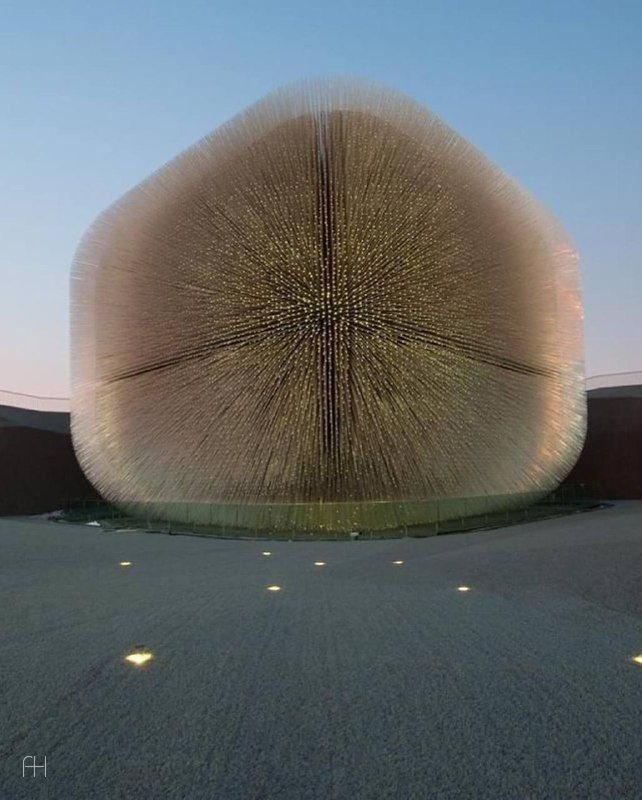
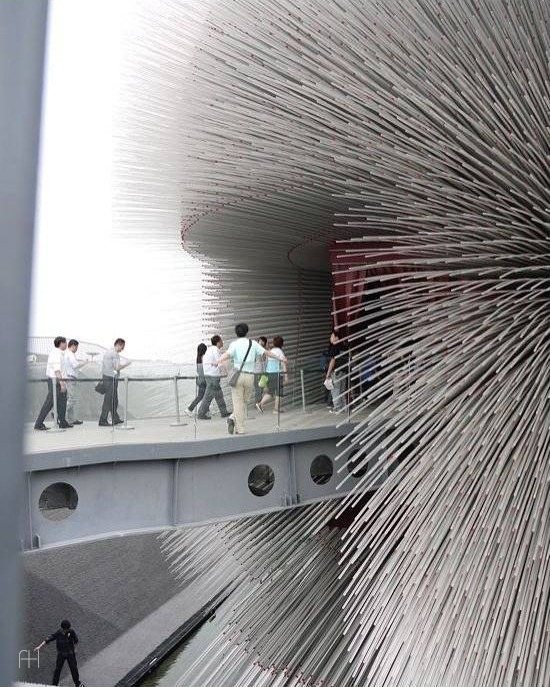
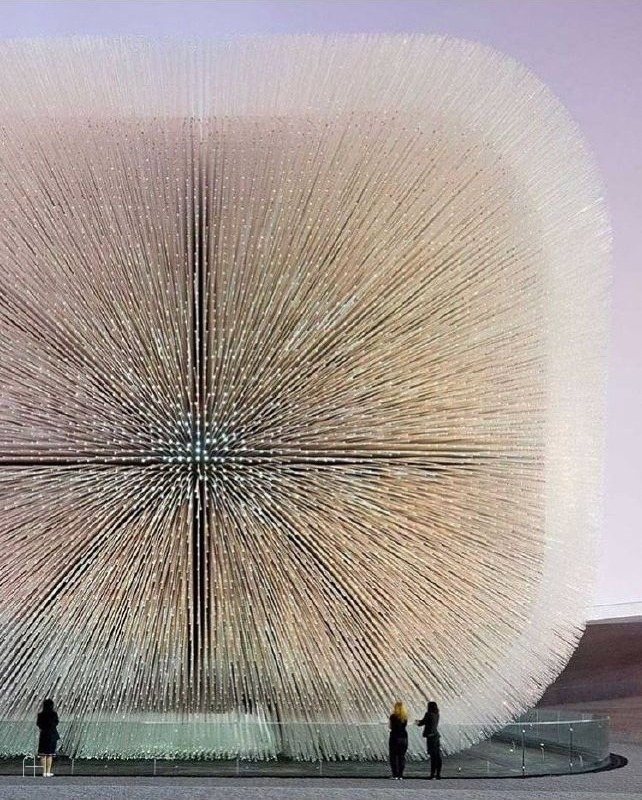
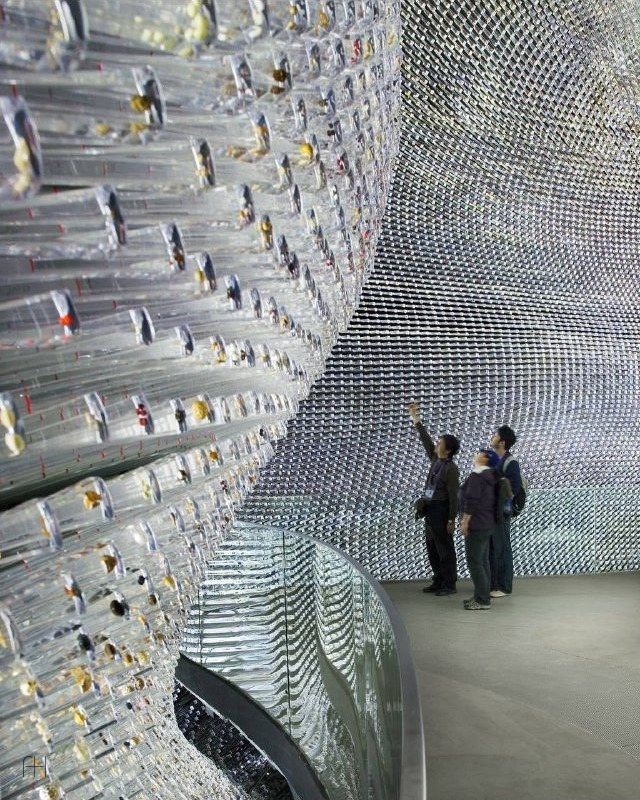
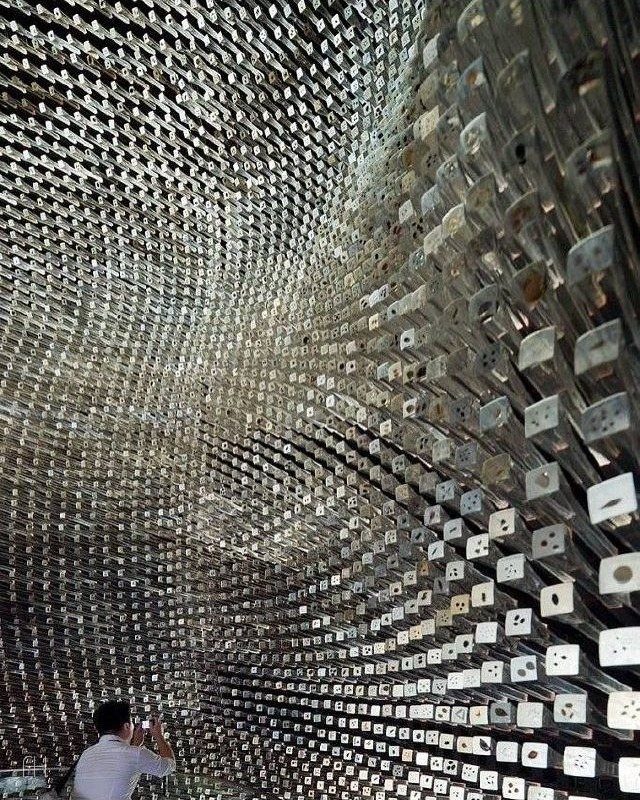
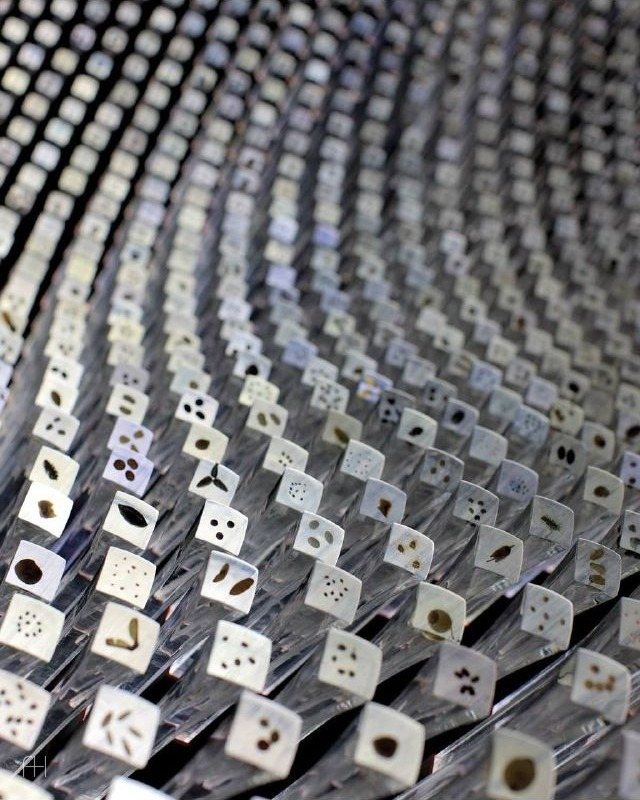
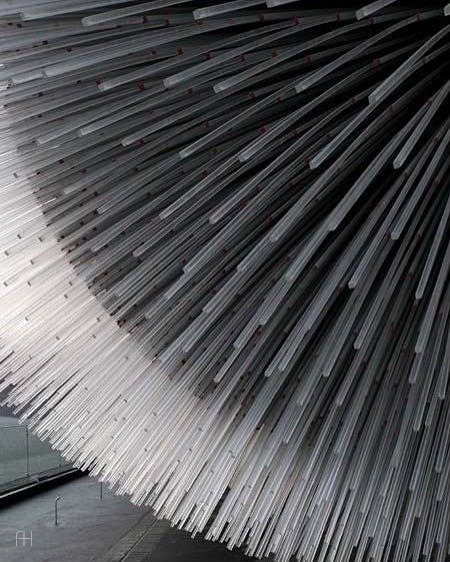
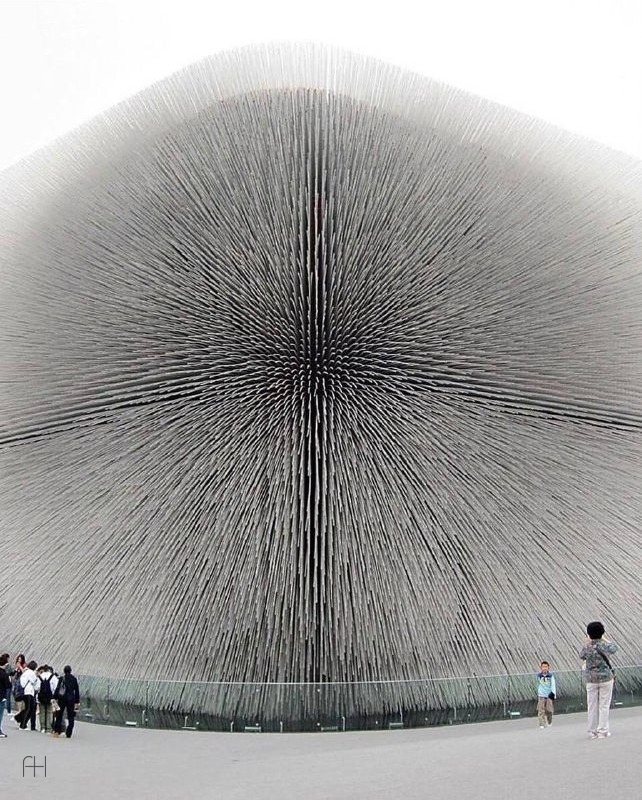
The UK Pavilion in Shanghai is not a building in the usual sense but a dense mass of 60,000 acrylic rods. Each rod hides a seed from the Millennium Seed Bank inside it.
The structure responds to light and wind, changing how it is perceived with every step. Instead of walls and doors there is a living shell, where architecture works through material and air.
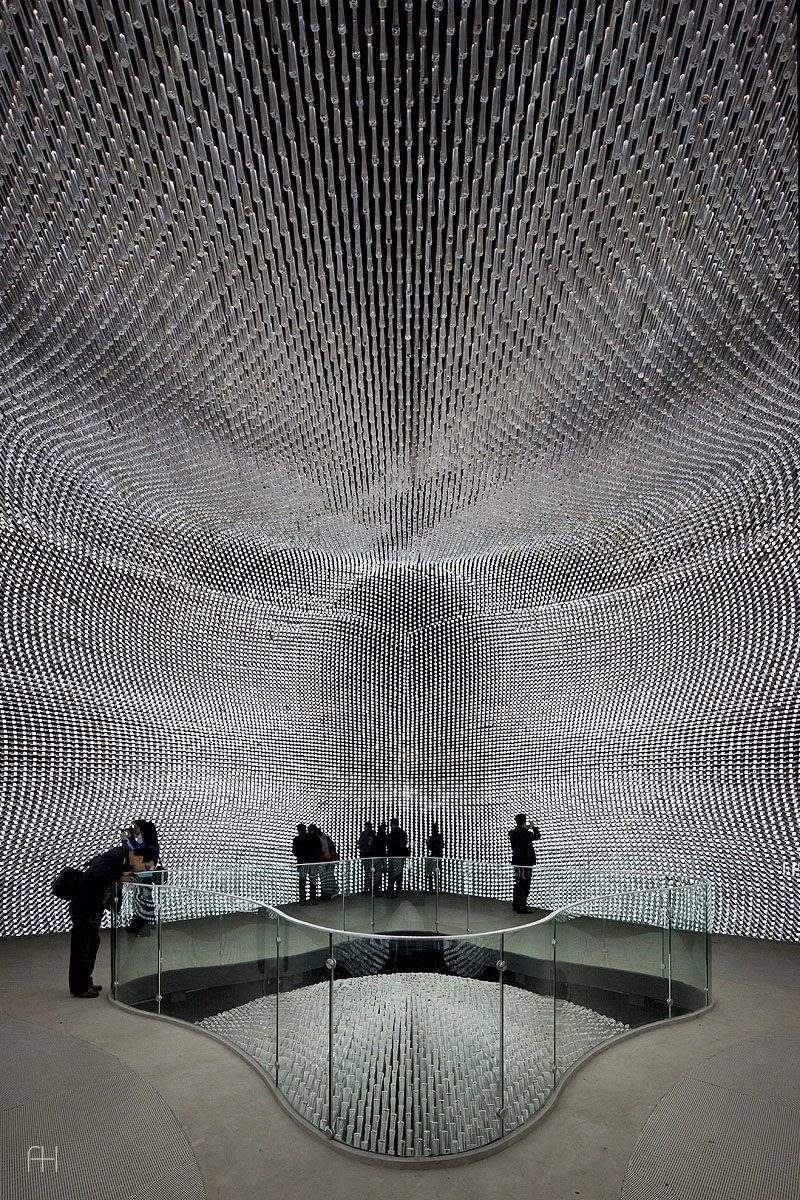
Each of the Seed Cathedral's 60,000 acrylic rods worked as a fiber-optic conductor.
By day they collected natural light and carried it into the pavilion, and at night they were lit from within, turning the whole building into a softly glowing object.
In other words, the pavilion literally “breathed” light, depending on the time of day, without the use of ordinary artificial windows or lighting on its surface.
This solution was not just striking: it emphasized the idea of the fragility of nature and the need to preserve the living world, an idea built into the structure itself.
The project became one of the most precise statements at the Expo: about nature, preservation and time.