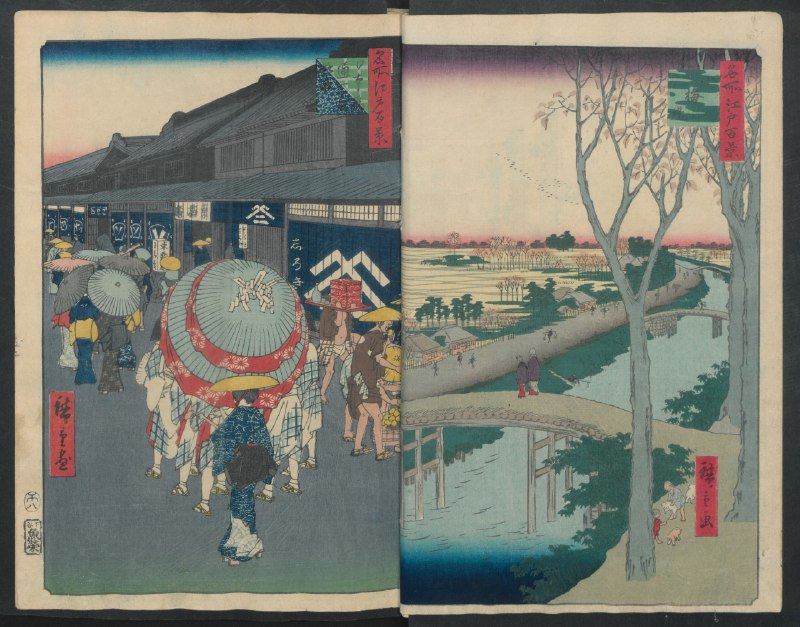
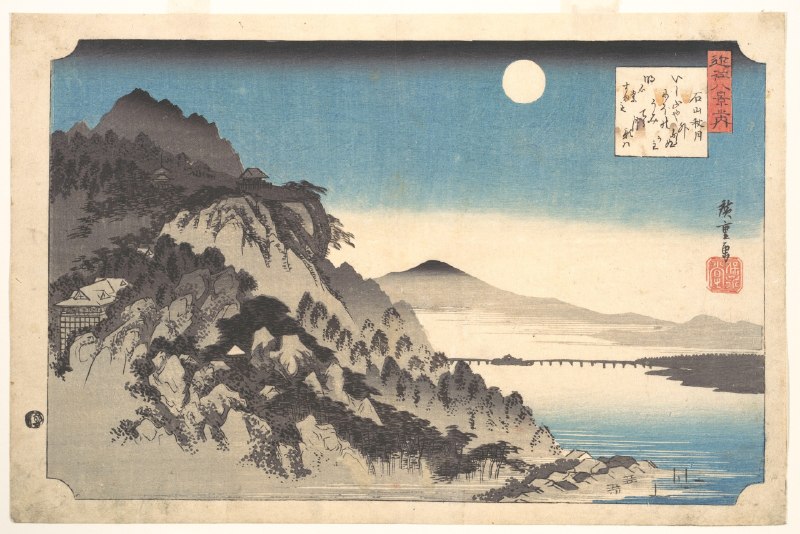
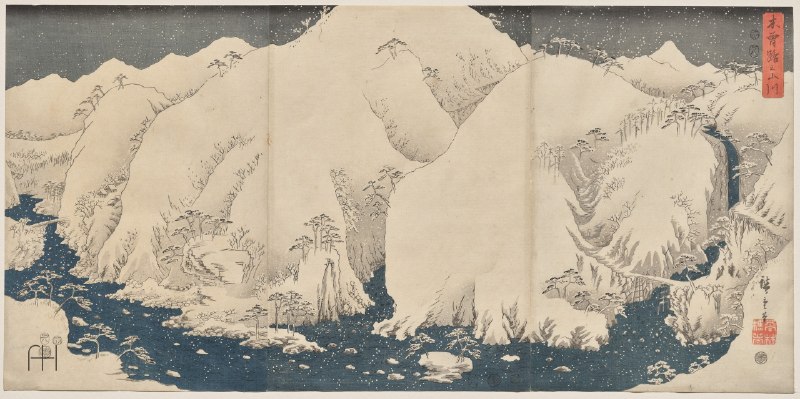
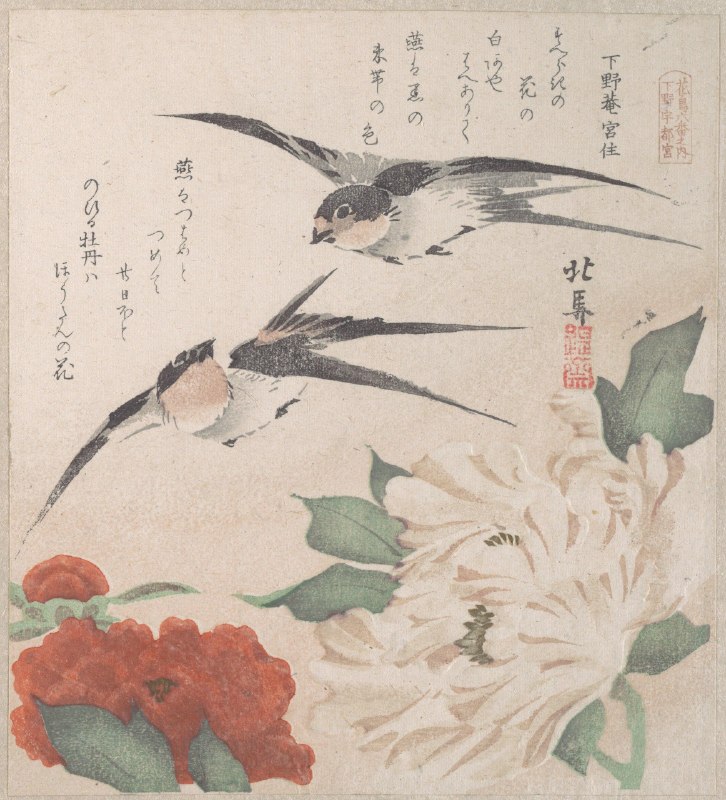
Hiroshige does not describe the city; he builds it through season, light and point of view: snow on a bridge, irises in a marsh, smoke over the river, a crowd under lanterns on a moonlit night. Each print in the series is a separate frame of urban life in Edo, where the foreground (a branch, a post, a figure) is brought sharply close to the eye and the horizon recedes deep into the sheet.
This way of seeing — compressed space, the diagonal, a chance fragment in the foreground — would later have a direct influence on European painting and early photography.