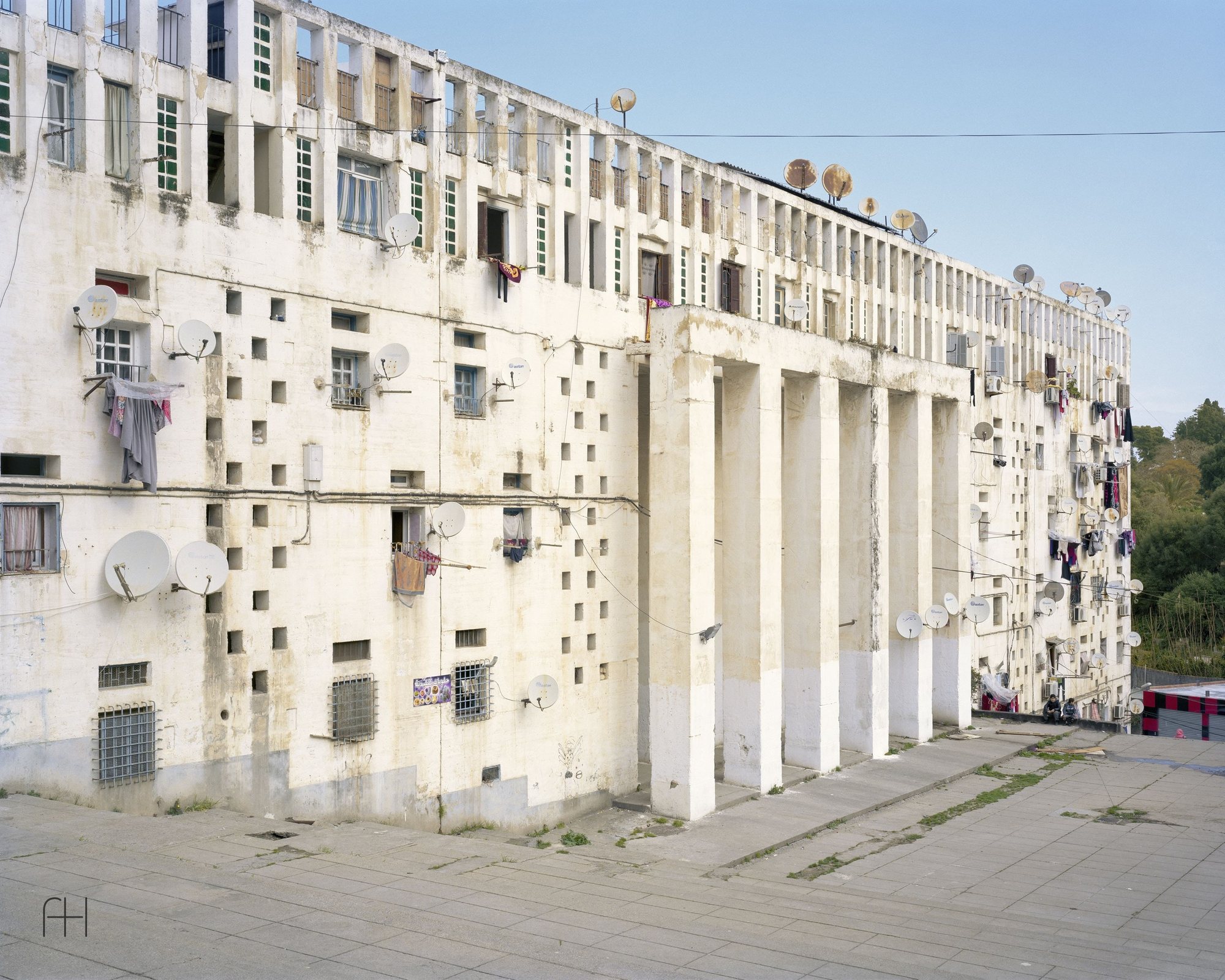
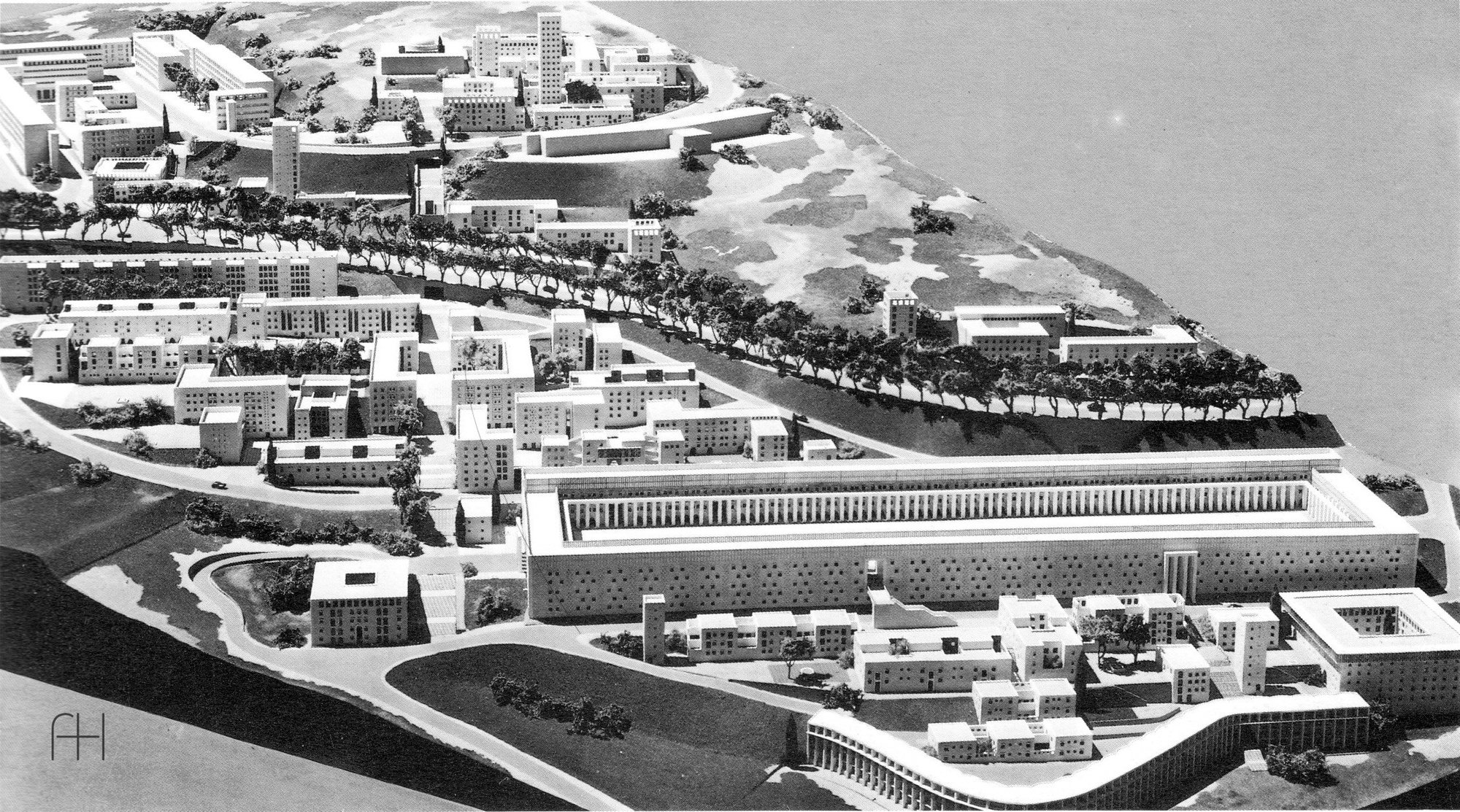
Climat de France was built for Algerian Muslims who were being moved out of the bidonvilles around the city. Mayor Jacques Chevallier commissioned three housing complexes from Pouillon, and this one was the cheapest: for Muslims only, with the smallest apartments. On a 1953 model it was called the "future Casbah".
Above the columns of the huge courtyard, Pouillon put one-room apartments, and he placed shops below. After independence, residents started building extra rooms right on the roof of the "200 Columns", and now there is a whole floor of shacks up there. Locals call the courtyard itself "Columbia" because of the drug trade.
Pouillon's other two complexes divided residents just as strictly. Diar es-Saada was for Europeans only, and in Diar el-Mahsoul Europeans and Muslims lived in different types of buildings. The first stone of Climat de France was laid on 4 August 1954, six months after a landslide on weak ground at the back of the site. Behind the monumental facade were apartments with very low ceilings and poor sanitation.
In December 1960, independence demonstrations took place in most Algerian cities, including in Climat de France. In 2011 the complex became a site of protest again. Police came to demolish informal buildings, and about 70 people were injured in the clashes.
Today there are about 5,000 apartments here, and families who have lived in the complex for generations don't have enough of them. In 2012 Stéphane Couturier made a video triptych about it. The Centre Pompidou describes it as a portrait of a utopia, conceived to pacify Algeria at the height of the conflict with France.