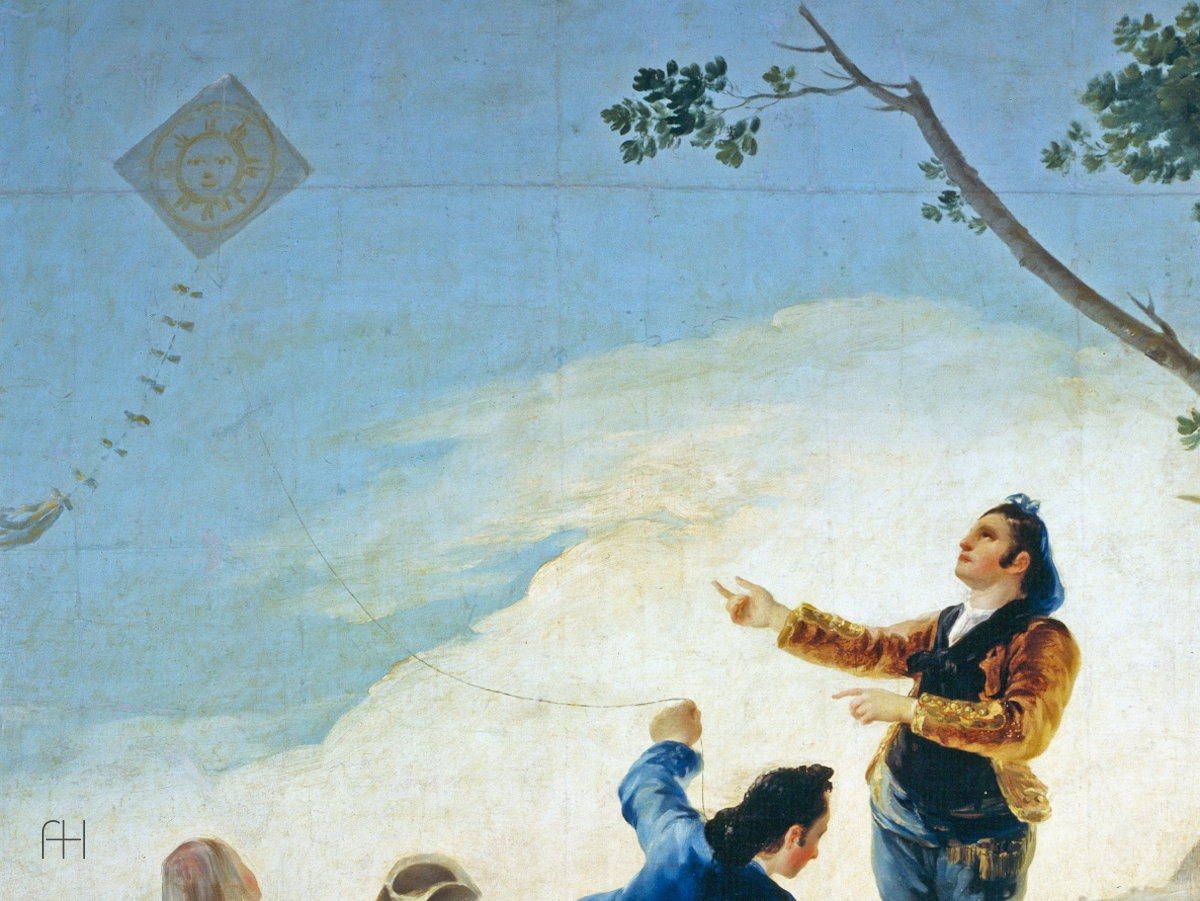
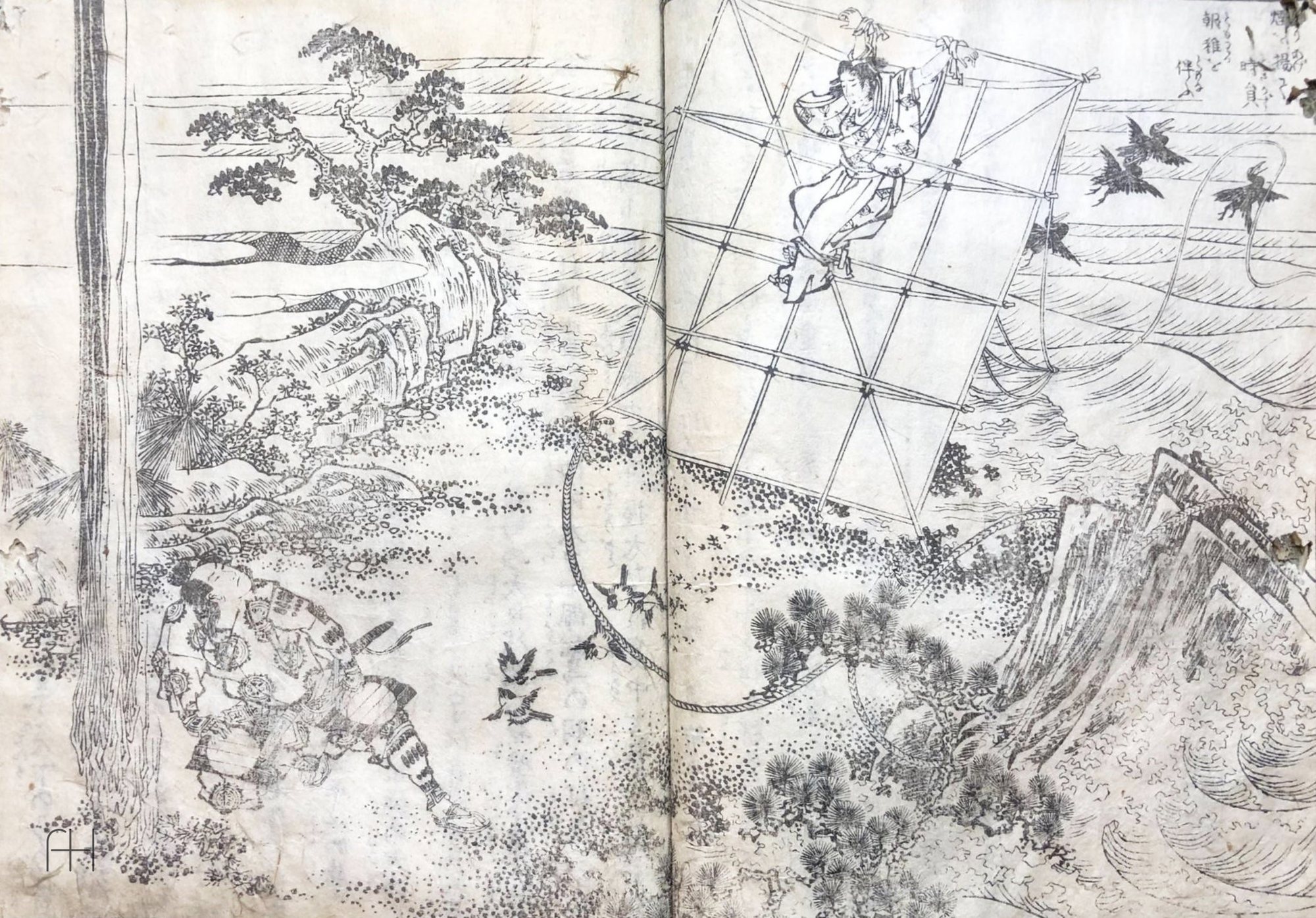
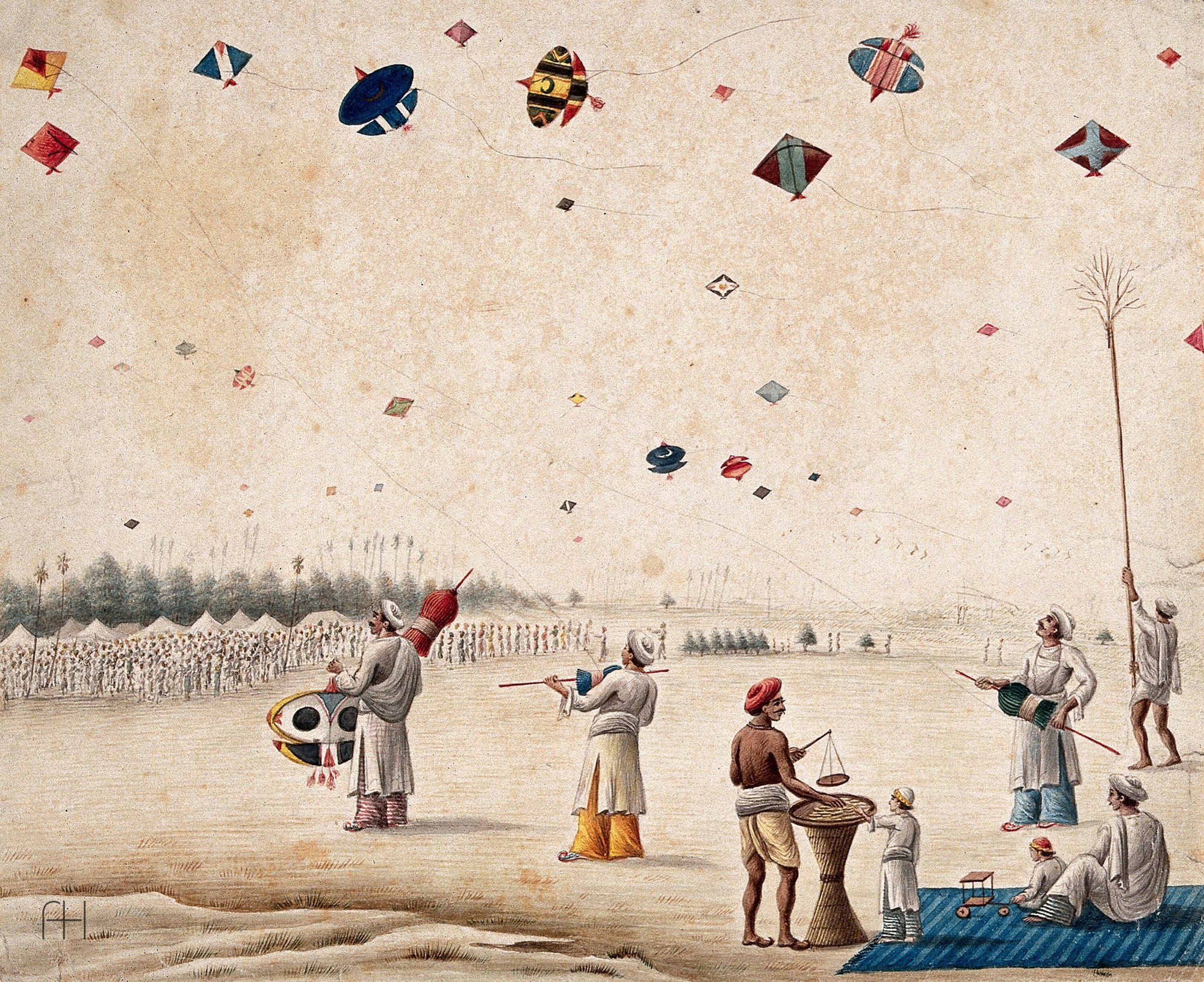
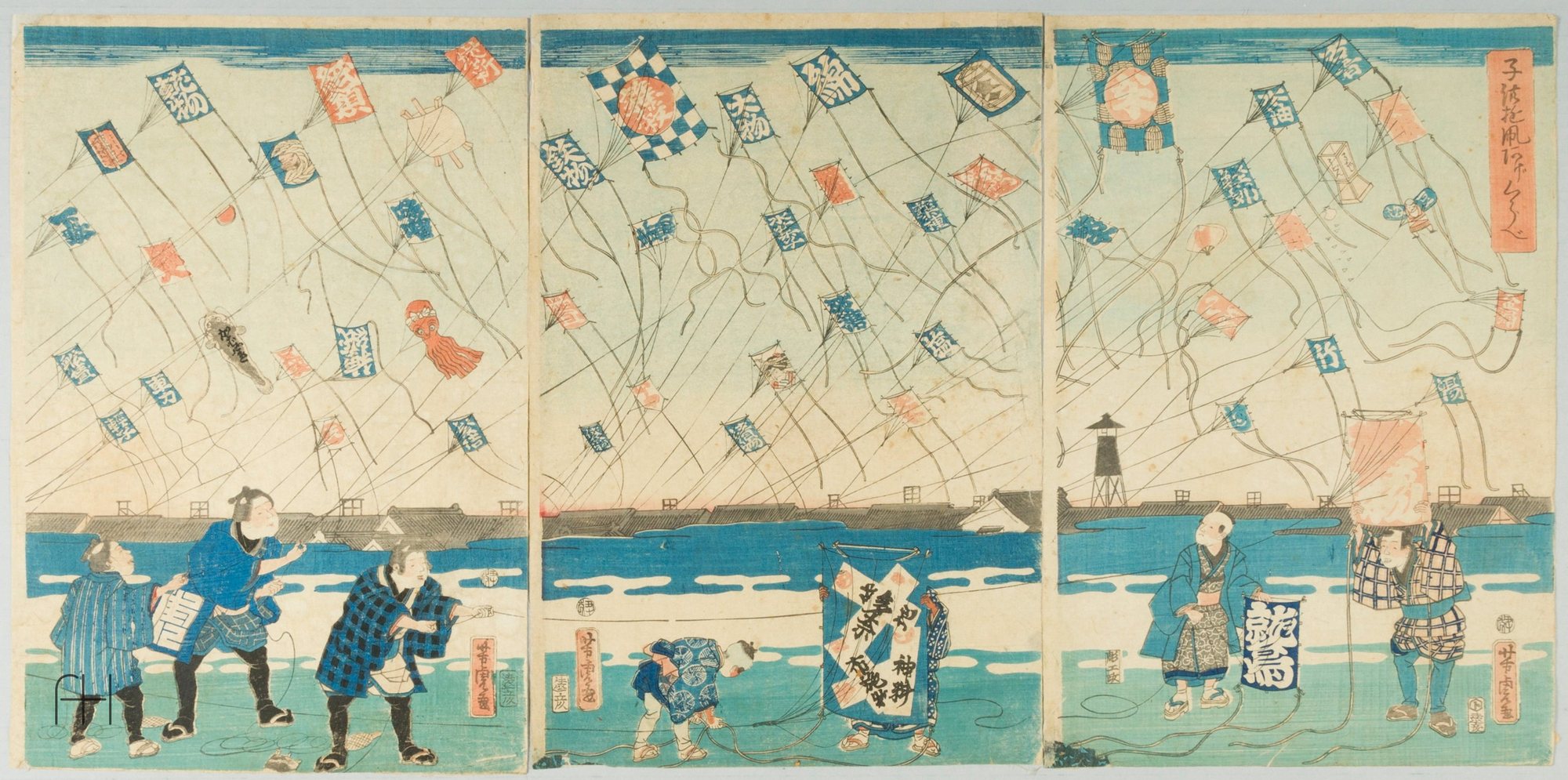
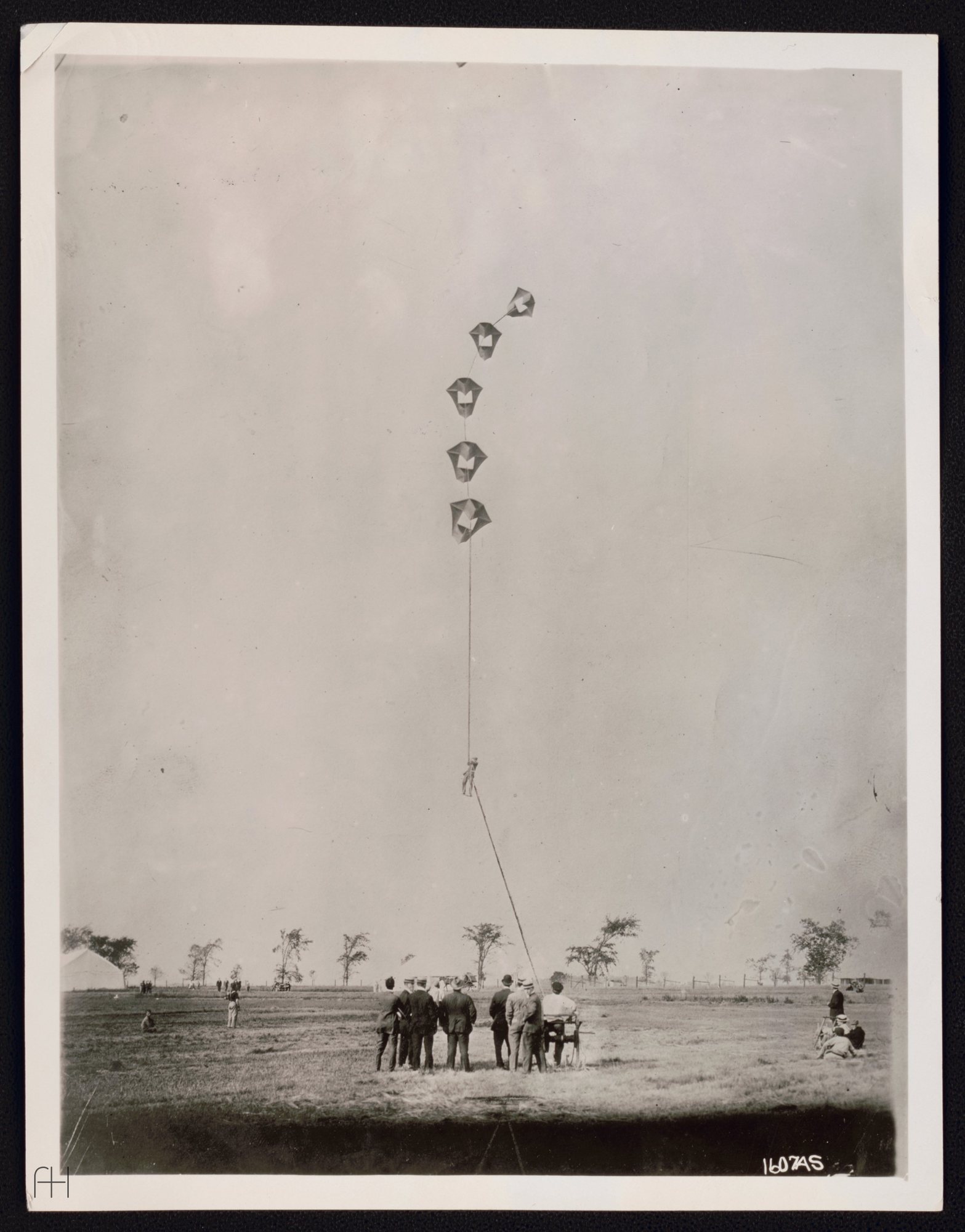
The kite has its own name in every language. The Germans say Drachen, dragon; the Greeks, paper eagle; the Spanish call it a comet. In Chinese it is the “wind zither”: bamboo flutes were once attached to kites.
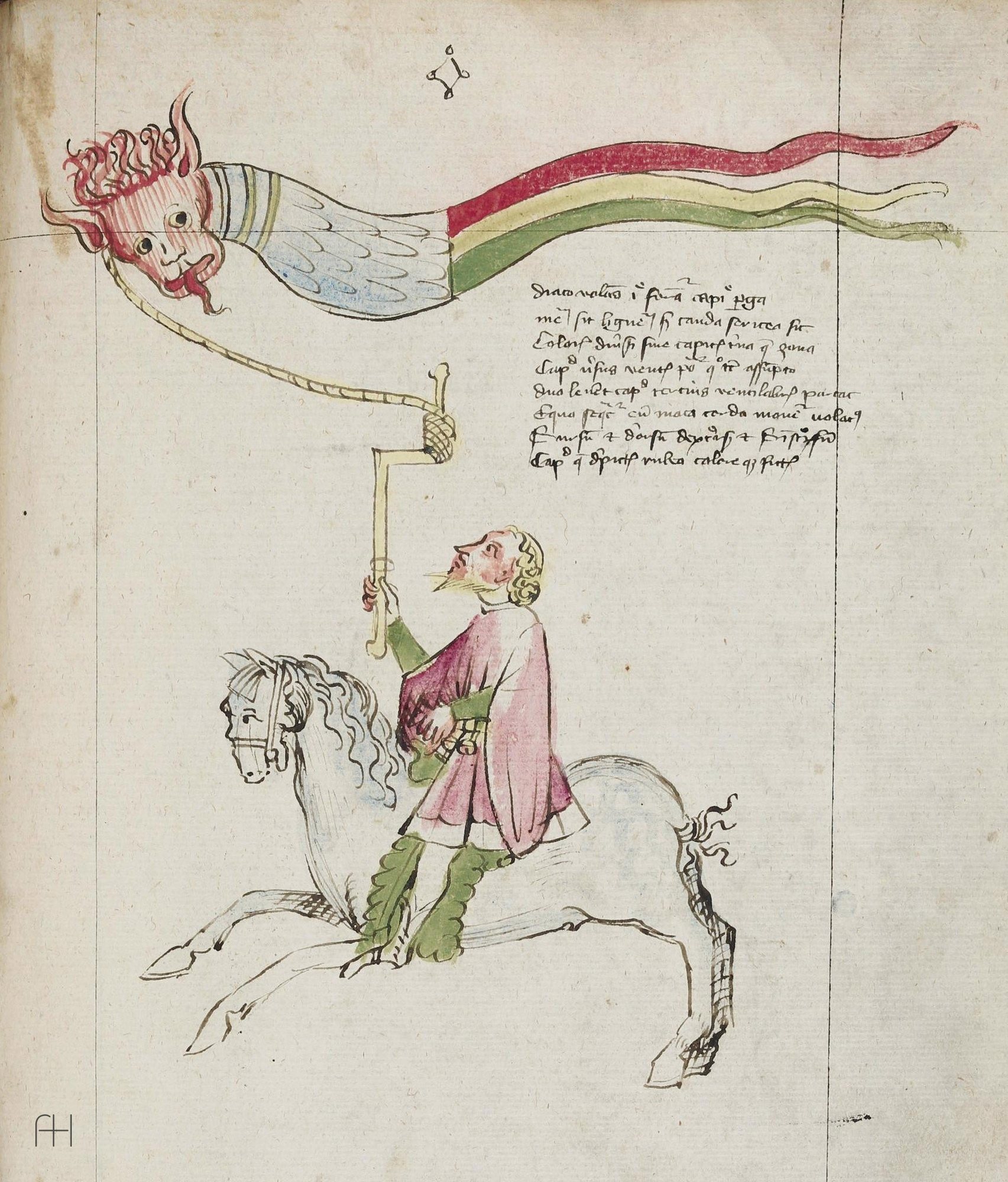
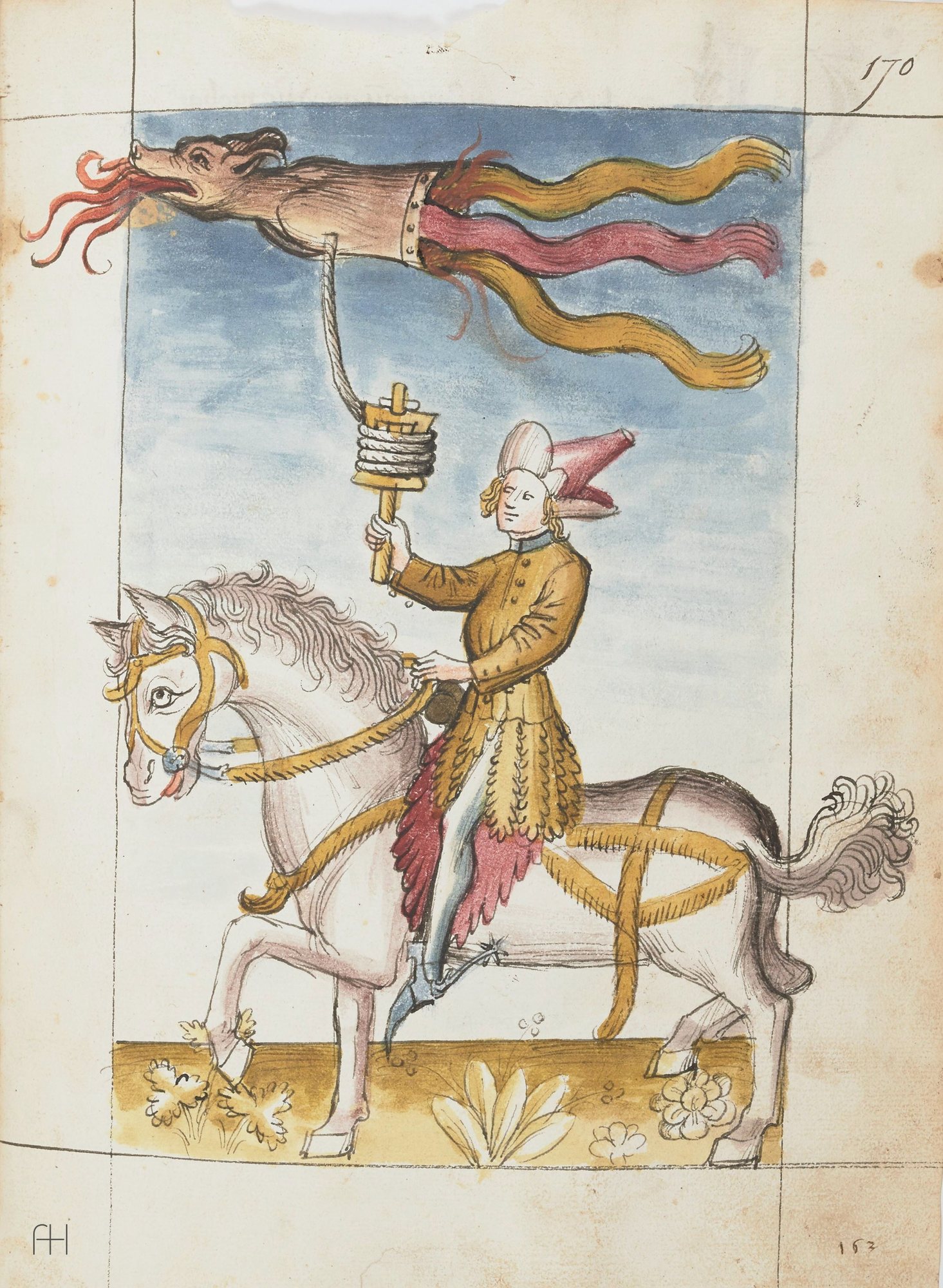
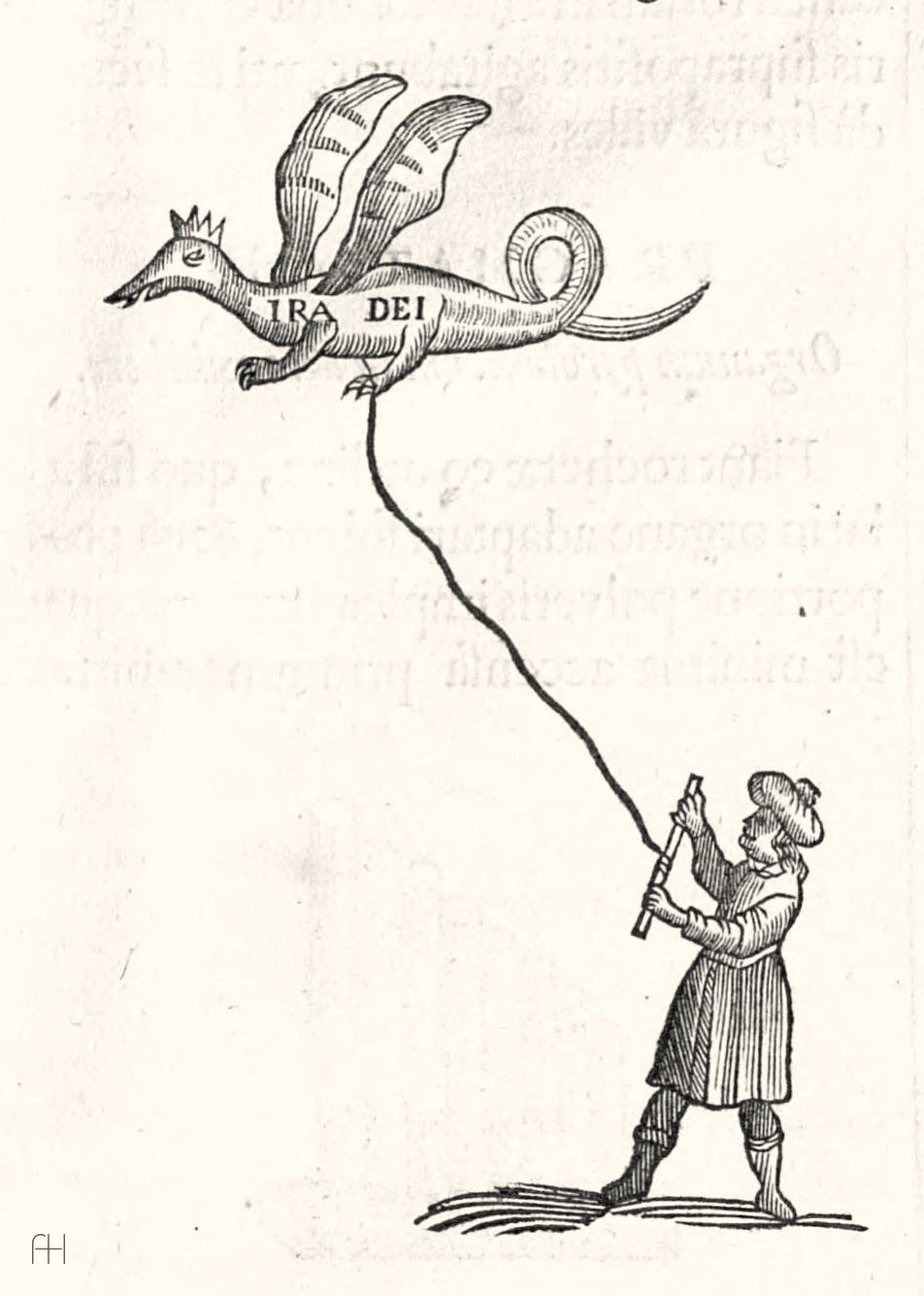
Some of the first European kites were drawn in manuscript copies of Bellifortis, Konrad Kyeser's military treatise, around 1430. A horseman holds a long sleeve on a cord, with a dragon's head and colored ribbons instead of a tail. In the engraving next to it, the kite already has wings and a crown, and on its side is the inscription IRA DEI, the wrath of God.