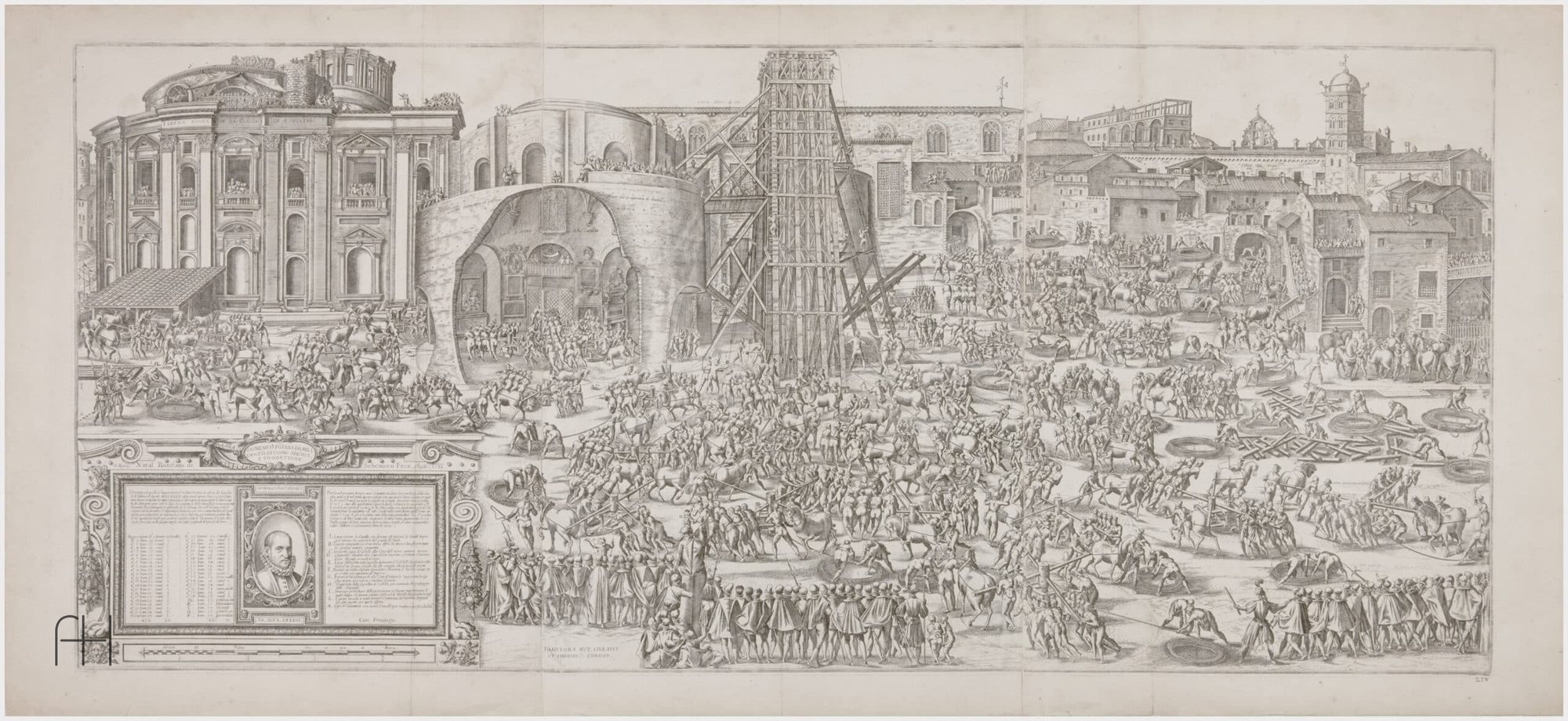
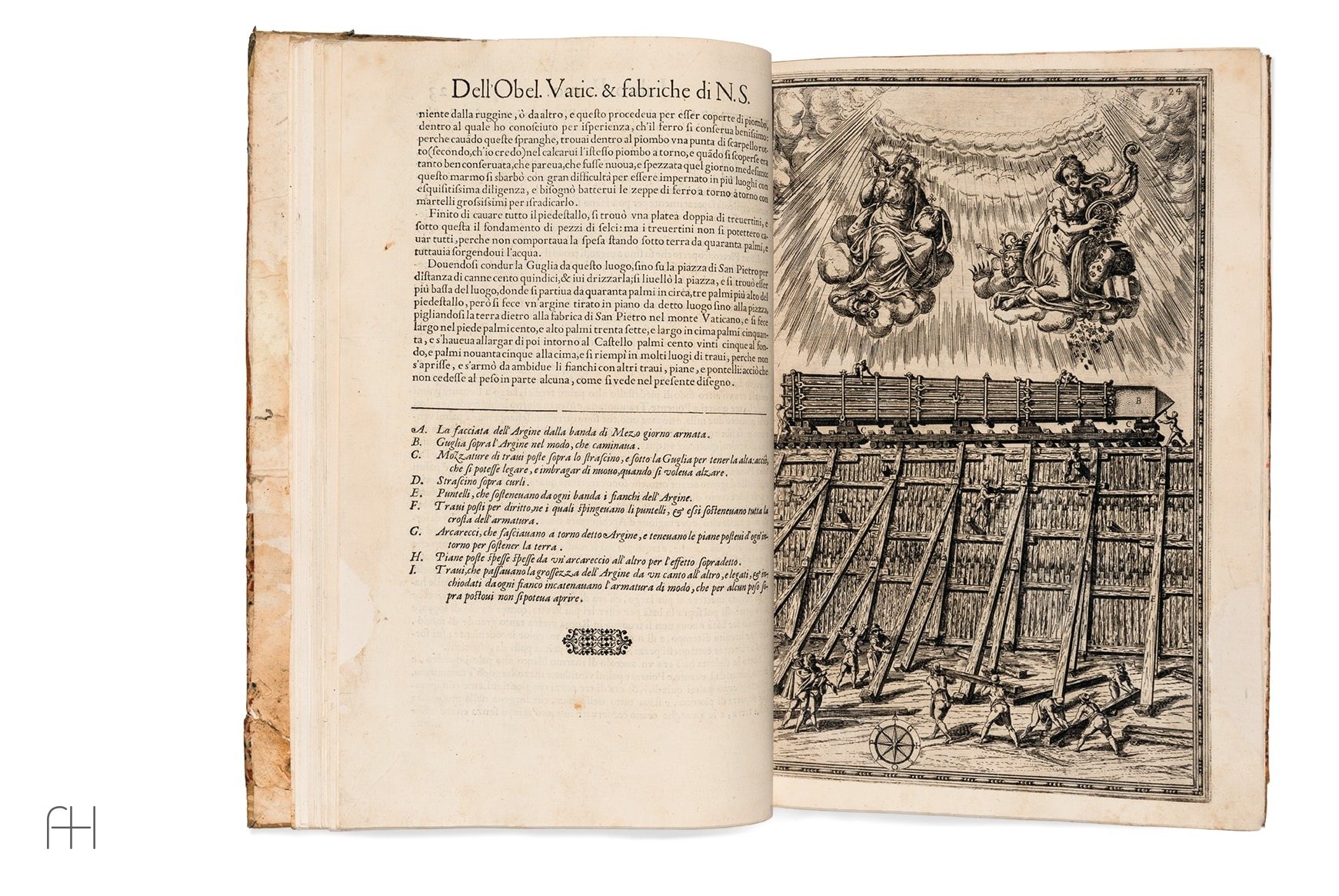
According to a medieval legend, the ashes of Julius Caesar lay in the bronze ball at the top of the Vatican obelisk. In May 1586 Domenico Fontana lowered the stone to the ground, and the papal metallurgist went straight to the ball and found nothing inside. The ball was taken off and a cross was put in its place. In September the obelisk was sprinkled with holy water and the pagan spirit was driven out of it. On the pedestal Sixtus V had it carved that he had cleansed the obelisk "from impure superstition."
Fontana, who did what nobody had taken on since Bramante, fared worse. After the pope's death he was accused of embezzling public money and dismissed in 1592, and he left for Naples to build the royal palace.
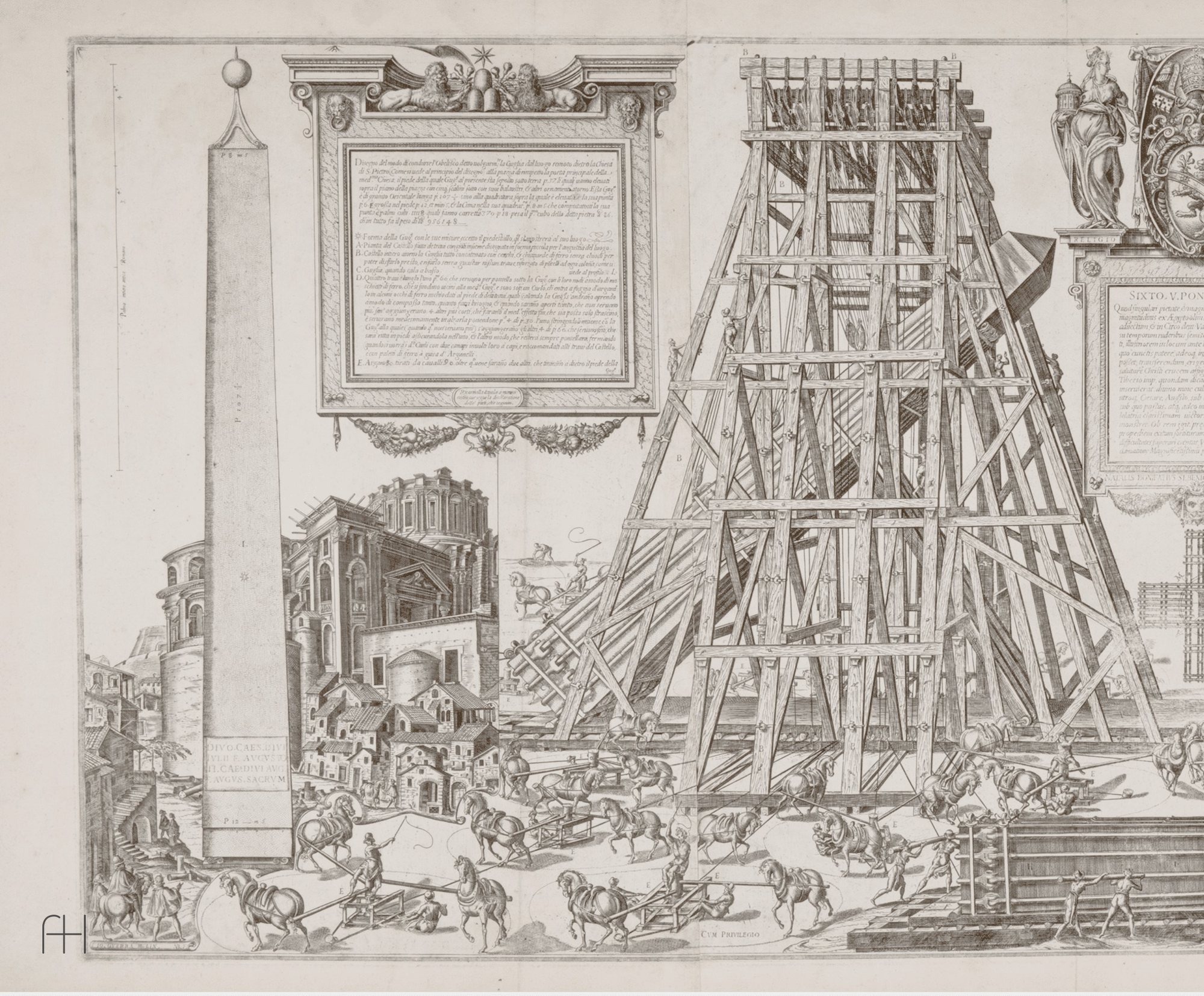
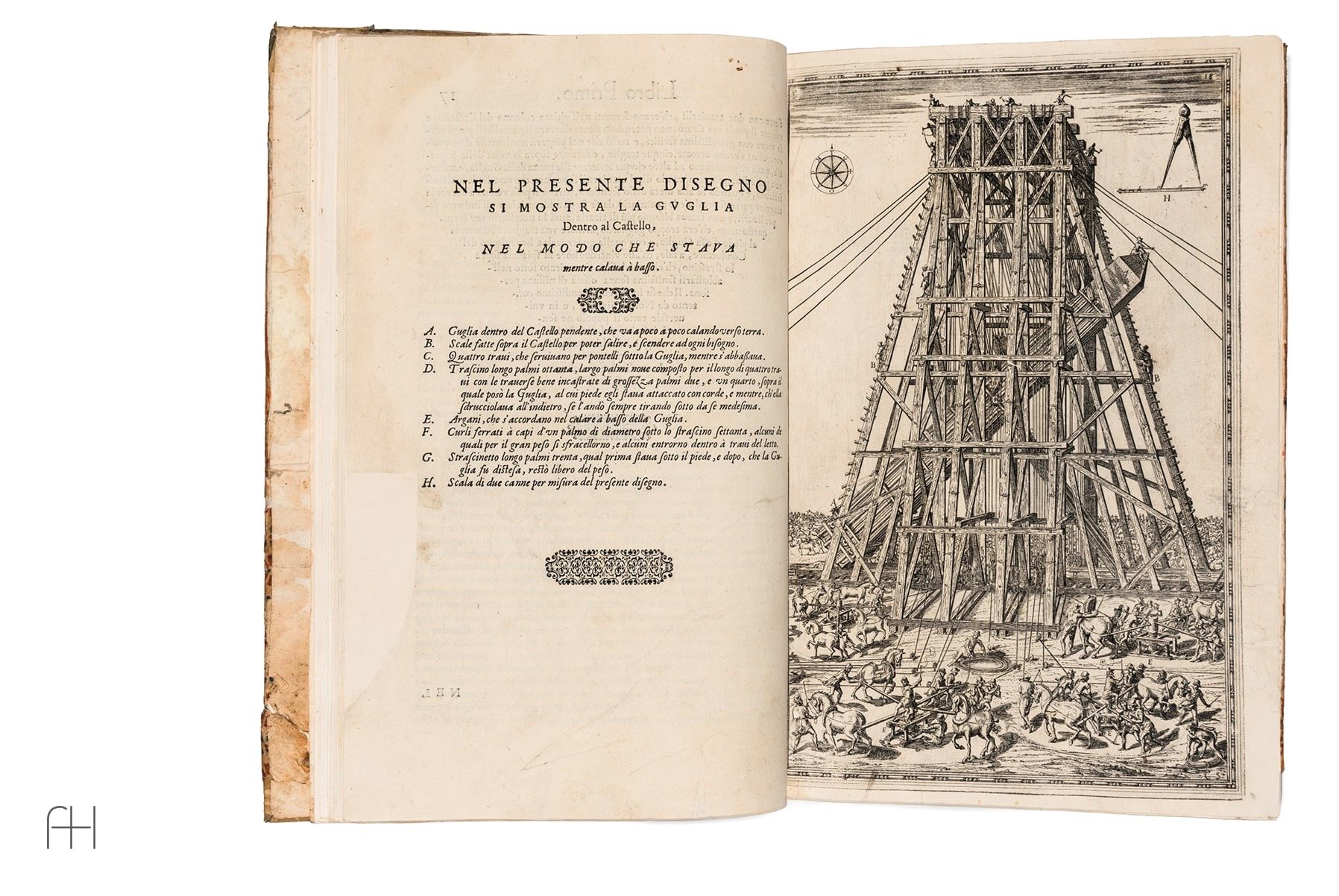
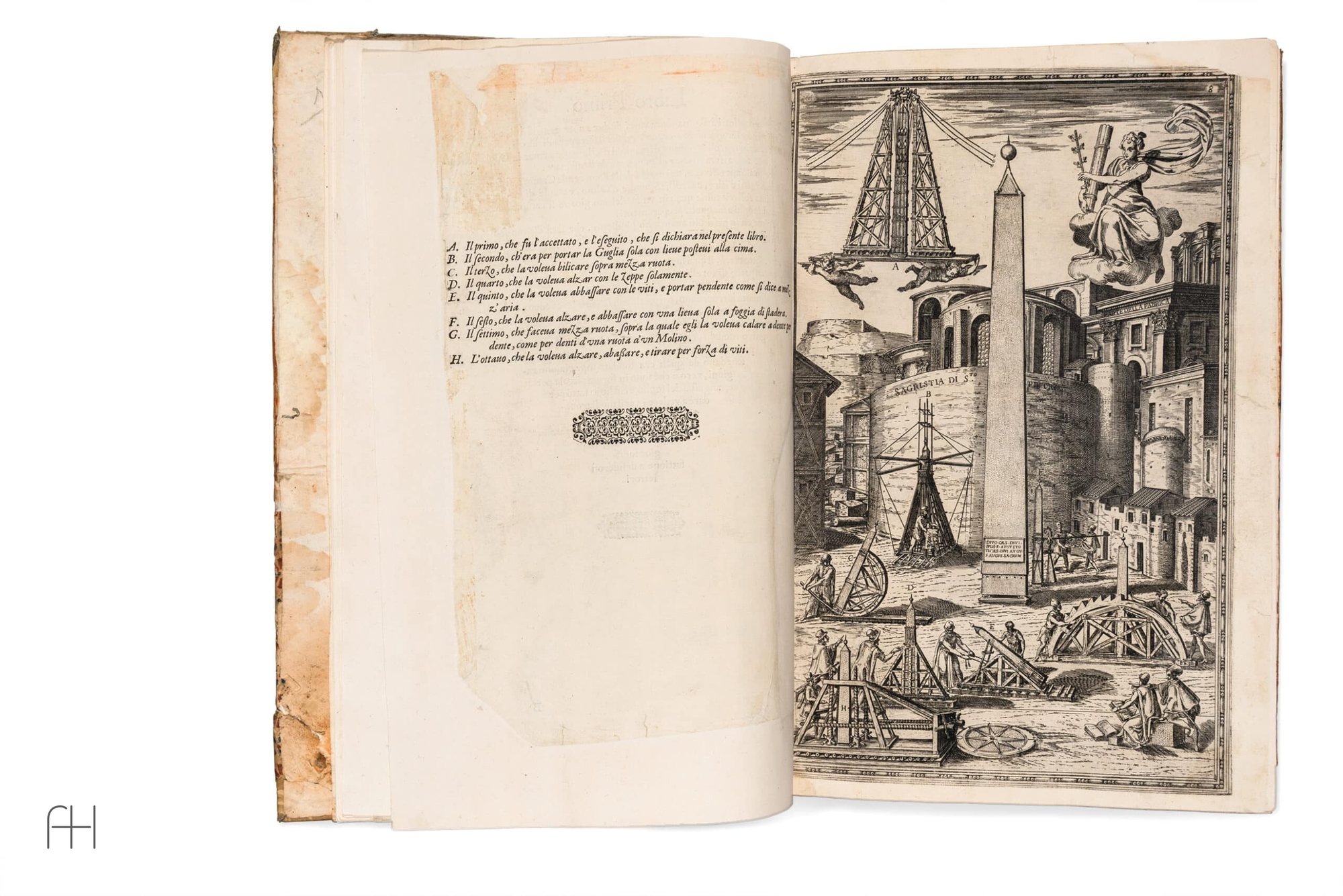
The obelisk was brought from Egypt for Caligula in 37 or 38 AD. By 1586 it was the only one still standing of almost fifty obelisks that had crossed the Mediterranean to Rome. Christians believed it had witnessed the martyrdom of the Apostle Peter. The commission of Sixtus V went through about five hundred proposals for moving it, and only Fontana suggested toppling the stone, hauling it across and setting it up again. For this he built a huge wooden tower-crane that he called the castello.
The best-known episode of the job is not in Fontana's book. According to tradition, the sailor Benedetto Bresca broke the ban on speaking, which was punishable by death, and shouted "Acqua alle corde!", meaning that the stretched ropes should be wetted with water. As a reward he supposedly asked for the right to bring palm branches to Rome from Sanremo every year for Easter.
The pope gave the ball to the city. It was put on the Marforio fountain, moved in 1692 to the balustrade of the Campidoglio, and is now kept in the Capitoline Museums. Fontana printed his book about the move in 1590, right after the death of Sixtus V. The obelisk itself gets 36 pages out of 108. In Naples Fontana became chief engineer of the kingdom and died there in 1607.