The Guggenheim Museum Bilbao is 29 years old; it opened in October 1997. Gehry drew his curves in CATIA, software that came from the aerospace industry. According to the museum, no architect had used it before him. It was what made it possible to turn those surfaces into precise drawings they could be fabricated from.
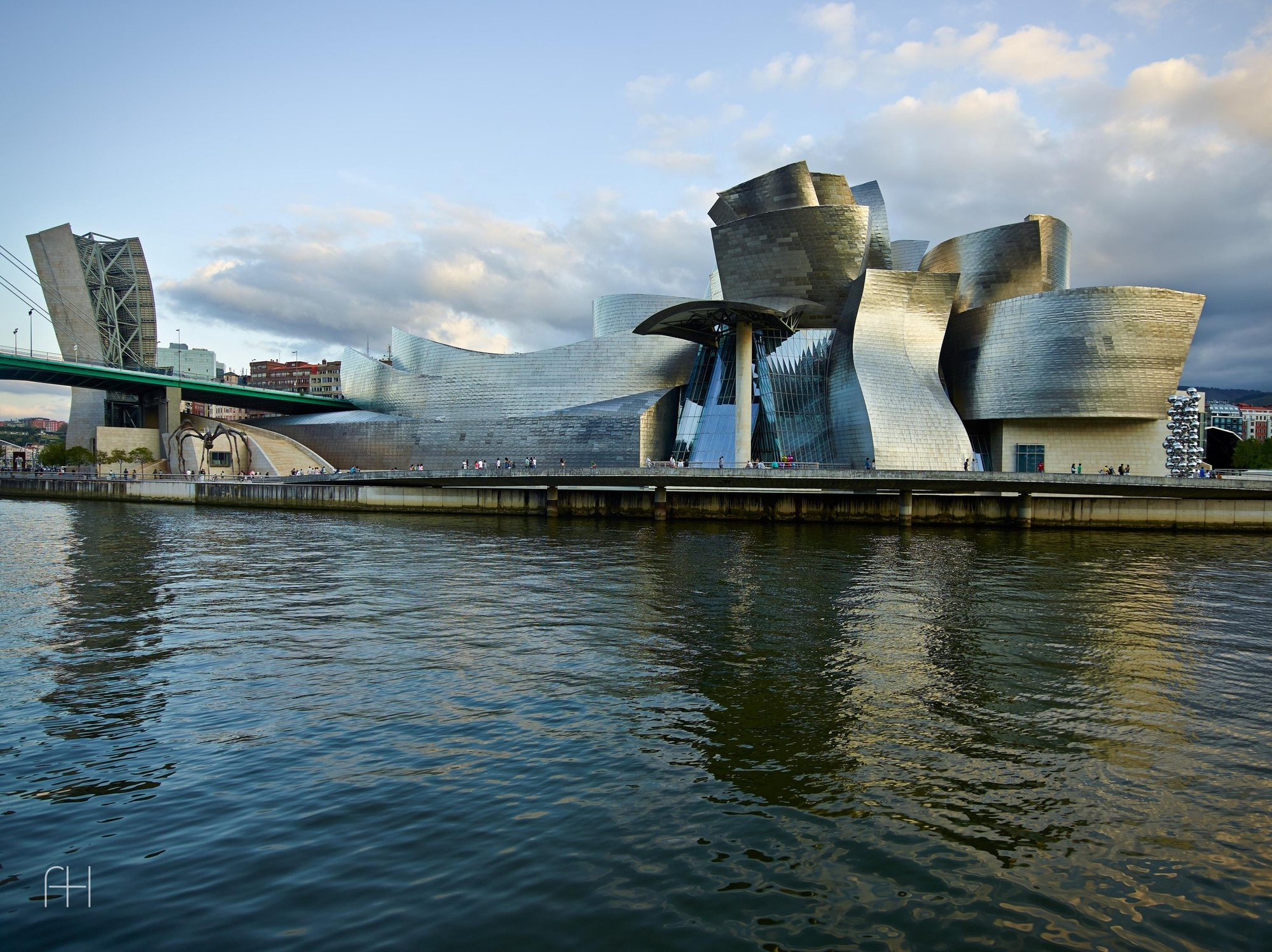
The titanium wasn't settled right away either. The lead-copper alloy Gehry had worked with before was rejected for environmental reasons. Stainless steel reflected light differently from how he wanted. In the end the building was clad in about 33,000 titanium plates, and it was the first time Gehry had used titanium.
The museum was built jointly by the Guggenheim Foundation and the Basque regional government. Gehry was chosen in 1992 after an invited competition; his rivals were Arata Isozaki and Coop Himmelb(l)au. Construction ran from October 1993 to October 1997. According to one architecture guide, the project came in on schedule and on a budget of about $89 million.
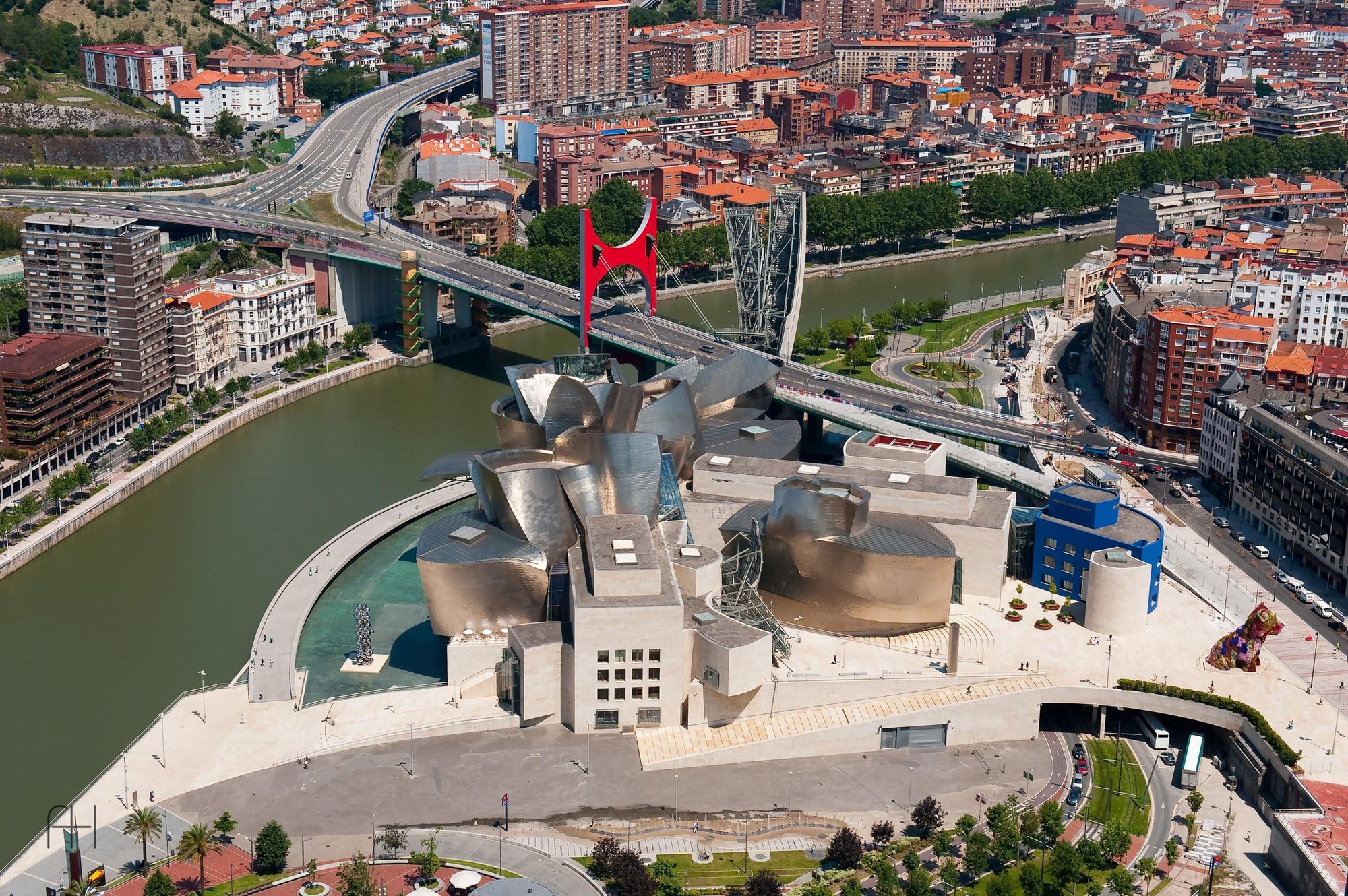
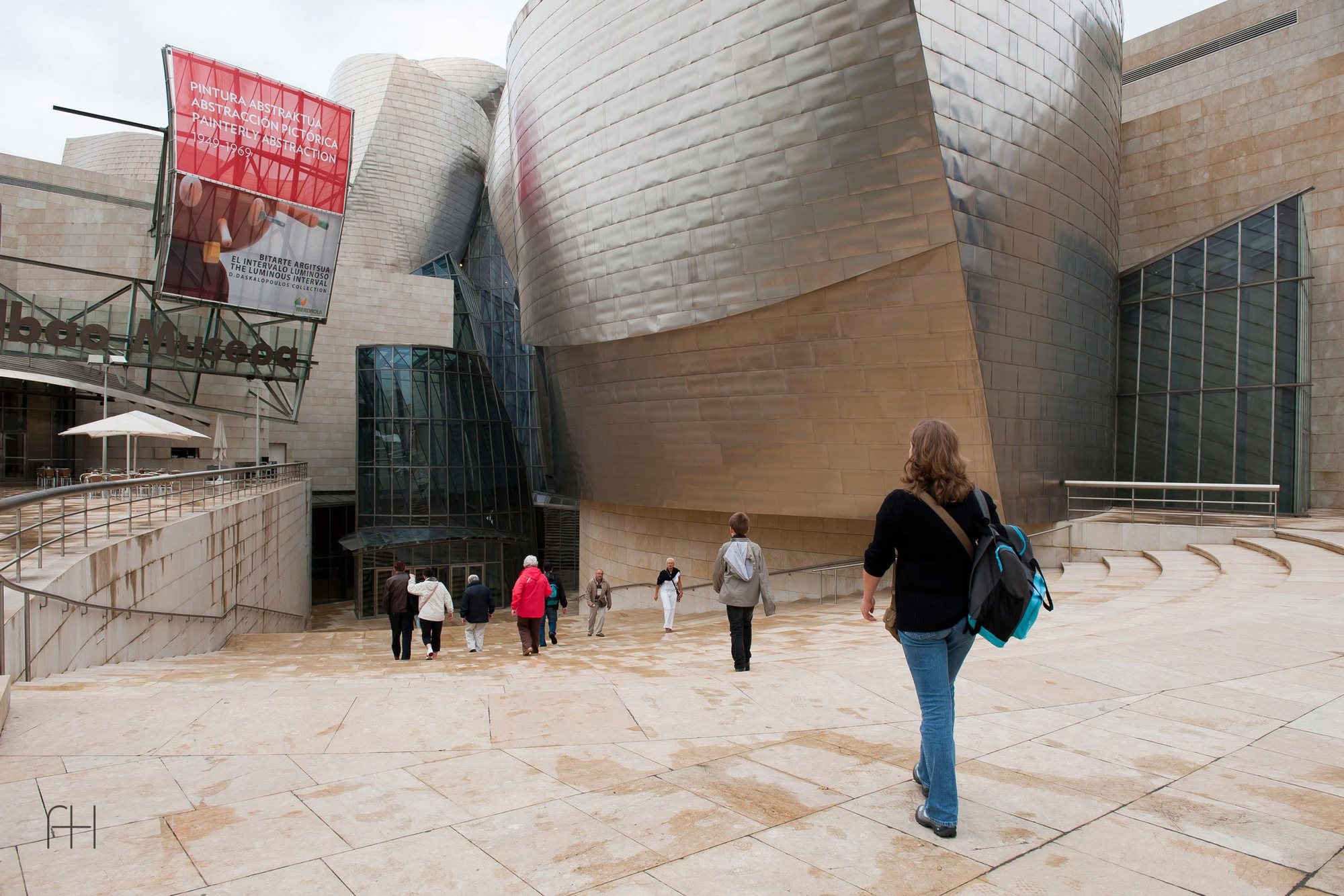
The site was a former industrial quay on the Nervión. It was meant to show how a factory zone becomes a place for culture and walks. From the river the building looks like a ship at its mooring, and Gehry himself compared it to a fish in motion. The quay lies lower than the city, so you go down a wide staircase into the lobby, and the museum doesn't rise above the neighboring buildings.
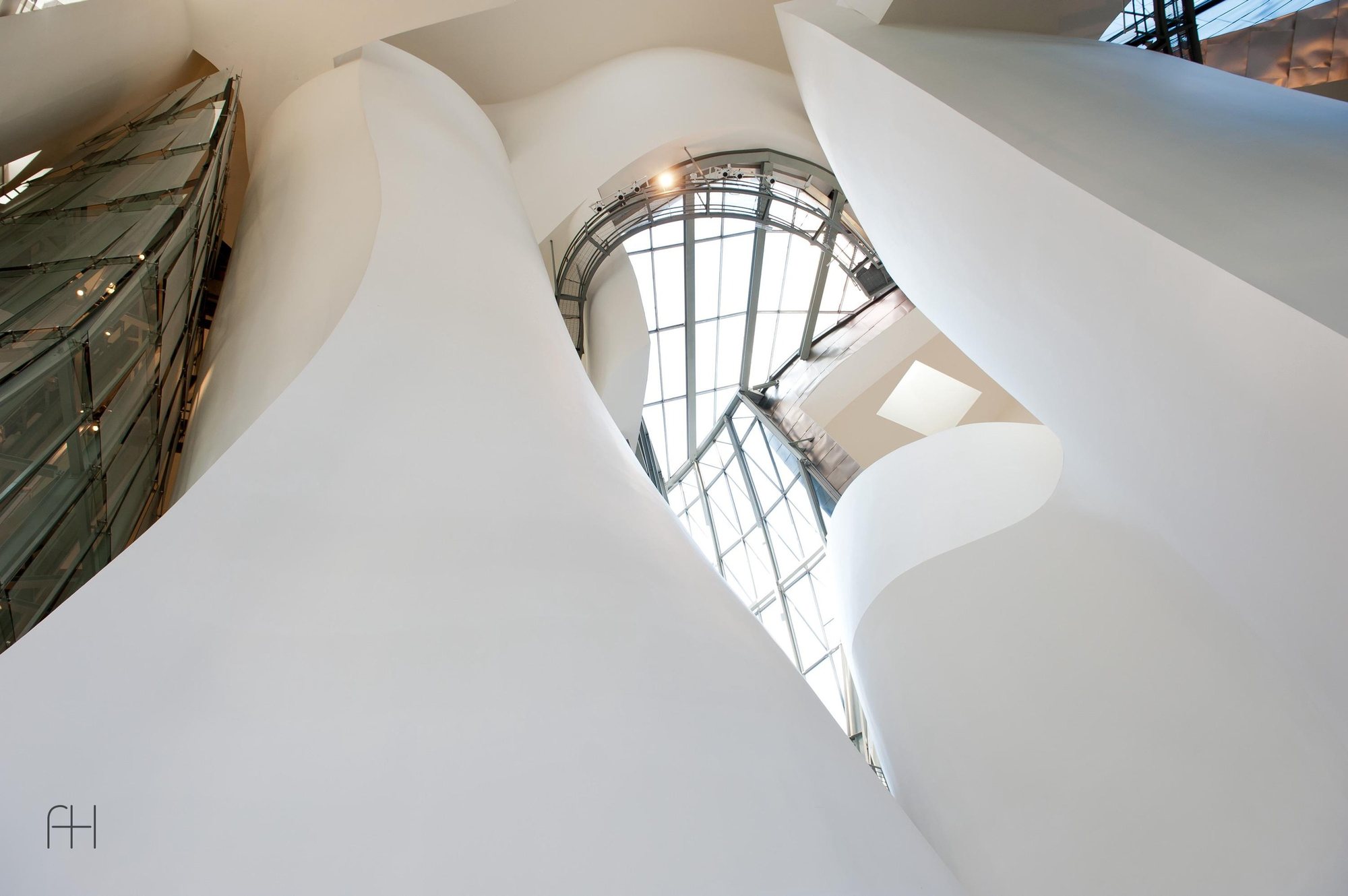
The unevenness of the cladding only seems random. Gehry said it was calculated to catch the light. The central atrium with a glass skylight above it he called the "Flower".